
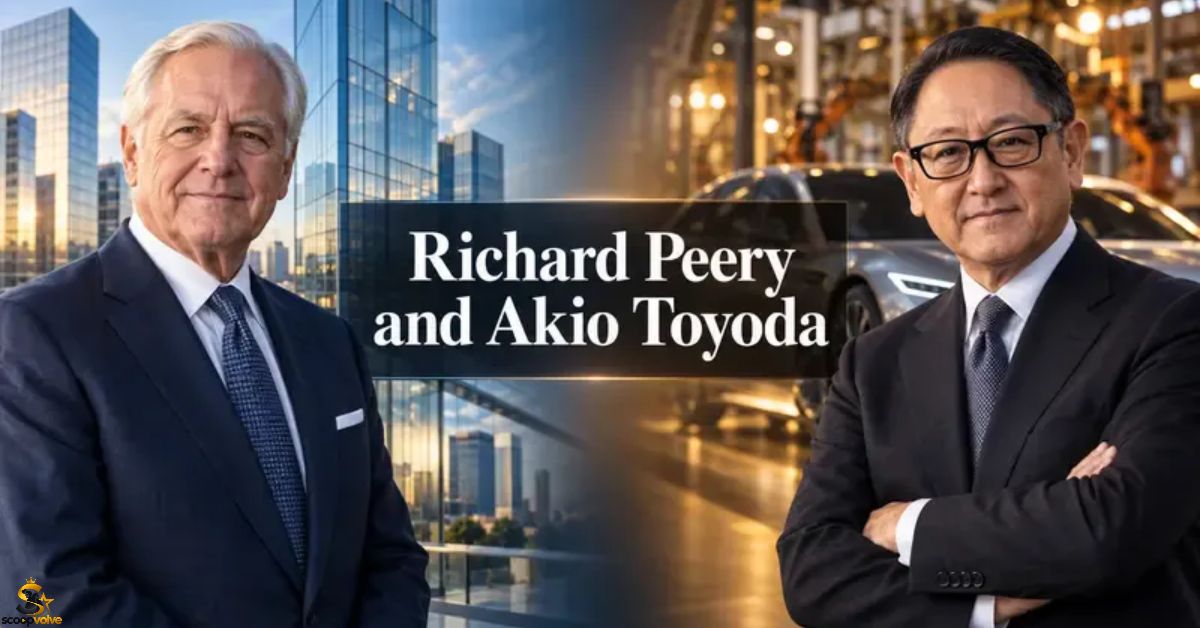
Richard Peery and Akio Toyoda represent two distinct paths to major business influence. Richard Peery became known for commercial real estate and his work with John Arrillaga, helping transform parts of Silicon Valley into office developments during the region’s technology-sector growth. Akio Toyoda built his career within Toyota Motor Corporation, gaining experience in manufacturing, product development, sales and marketing, purchasing, information technology, and international operations before becoming Toyota president in 2009.
He later became Toyota chairman in 2023. Peery’s career centers on property development and long-term investment, while Toyoda’s reflects corporate leadership, mobility, and automotive manufacturing. Their different backgrounds provide useful insight into long-term thinking, adaptability, industry expertise, strategic decisions, and lasting business influence.
Quick Facts About Richard Peery and Akio Toyoda
| Fact | Richard Peery | Akio Toyoda |
| Full Name | Richard Peery | Akio Toyoda |
| Known For | Commercial real-estate development | Toyota corporate leadership |
| Primary Industry | Commercial real estate | Automotive manufacturing |
| Major Business Connection | John Arrillaga | Toyota Motor Corporation |
| Key Region | Silicon Valley, California | Japan and global markets |
| Education | Brigham Young University; Stanford MBA program | Keio University; Babson College |
| Family Connection | Son of H. Taylor Peery | Grandson of Toyota founder Kiichiro Toyoda |
| Business Role | Real-estate entrepreneur and developer | Corporate executive and automotive leader |
| Major Development Focus | Office developments and office parks | Vehicles, mobility, and global operations |
| Toyota Milestone | — | 2009: Became Toyota president |
| Chairman Milestone | — | 2023: Became Toyota chairman |
| Philanthropic Focus | Financial education; H. Taylor Peery Institute | Mobility, motorsports, and broader public initiatives |
Who Is Richard Peery?
Richard Peery is an American real-estate entrepreneur best known for his role in the development of Silicon Valley commercial real estate. His career was built around property development, land acquisition, office developments, and long-term investment rather than the technology businesses that eventually became synonymous with the region.
Peery became particularly prominent through his partnership with John Arrillaga, another major Silicon Valley real-estate developer. Together, they acquired farmland in the 1960s and developed it into office parks designed to serve the expanding technology sector. Stanford Report describes their strategy as building office space in anticipation that technology companies would follow.
That approach placed Peery in a distinctive position. He did not create a major technology company, but his property-development decisions helped provide physical infrastructure for companies operating during Silicon Valley’s transformation.
Richard Peery’s Early Background
Richard Peery was born into a family with experience in banking and real estate. His father, H. Taylor Peery, had a background in banking and property development and was also connected to Stanford through his education.
Richard attended Brigham Young University and later entered the Stanford MBA program, although he did not complete the program. Forbes notes that he gained early practical experience by managing his father’s property portfolio.
This combination of formal education and practical experience helped shape his entrepreneurial mindset. Rather than following a conventional corporate career, Peery moved into property management and investment, eventually developing a much larger commercial real-estate portfolio.
His family legacy also became connected with financial education. Richard and his sister, Nancy Peery Marriott, and their spouses supported the H. Taylor Peery Institute of Financial Services at Brigham Young University. BYU states that a $3 million endowment from the families helped establish the institute in honor of their father.
Richard Peery’s Impact on Silicon Valley
The story of Richard Peery is closely connected to Silicon Valley’s physical transformation. Before the technology boom reshaped the area, much of the Santa Clara Valley contained orchards and agricultural land. Peery and Arrillaga saw an opportunity to convert selected farmland into commercial properties.
Their strategy focused on creating office parks where growing technology companies could establish operations. Stanford reports that Peery-Arrillaga eventually became one of the region’s largest commercial real-estate developers, with tenants including major technology companies such as Intel, Apple, Facebook, and Google.
This illustrates an important form of market transformation. Technology companies needed engineers and innovation, but they also needed offices, research facilities, transportation access, and surrounding infrastructure. Commercial real estate became an indirect but important part of Silicon Valley’s expansion.
Real Estate and Long-Term Investment
Peery’s approach demonstrates how long-term investment can work when an investor identifies structural changes before they become obvious to everyone else.
His partnership with John Arrillaga involved several connected strategies:
- Land acquisition: Buying strategically located property before demand fully developed.
- Farmland transformation: Converting agricultural land into commercially useful sites.
- Office developments: Creating buildings suited to growing businesses.
- Financing and development: Combining capital decisions with physical property development.
- Long-term investment: Holding and developing assets with future demand in mind.
Forbes reports that Peery and Arrillaga sold many of their buildings for approximately $1.1 billion in 2006, illustrating the scale eventually reached by their real-estate business.
Peery’s story therefore provides an example of how a real-estate developer can benefit from broader economic changes without operating directly in the industry driving those changes.
Who Is Akio Toyoda?
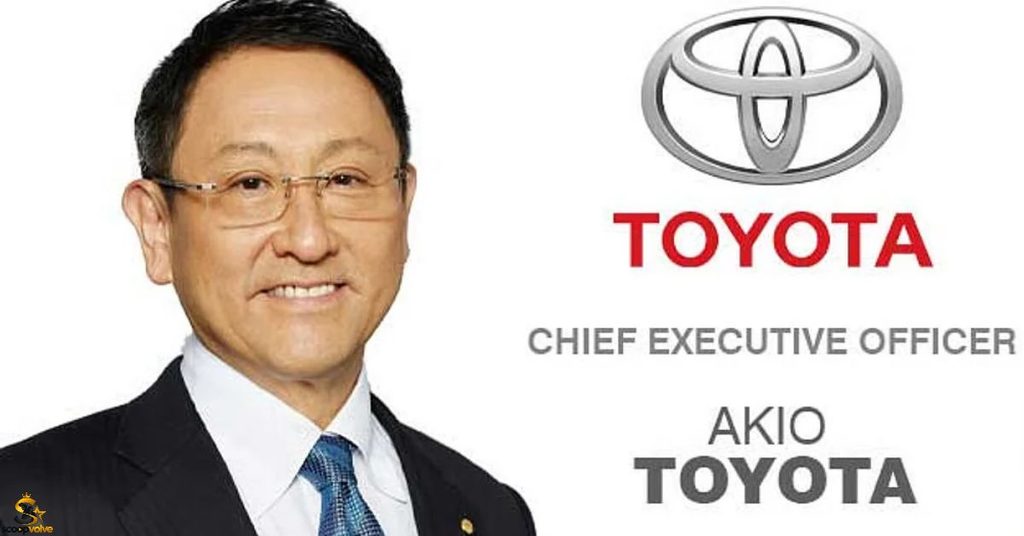
Akio Toyoda is a Japanese business executive and chairman of Toyota Motor Corporation. He is part of the Toyota founding family and is the grandson of Kiichiro Toyoda, who founded Toyota Motor Corporation.
Unlike Peery’s career in property development, Toyoda’s professional identity is closely tied to the automotive industry, automotive manufacturing, global mobility, and corporate leadership.
Toyota’s official biography records that Toyoda joined Toyota in 1984 and subsequently worked across multiple areas of the company, including production, marketing, product development, purchasing, information technology, and international operations.
His career was therefore not limited to one corporate function. He accumulated experience across different parts of the business before reaching the company’s highest leadership positions.
Read More: Brian Roberts and Amy Hood: What Links Them? 2026
Education and Entry Into Toyota
Toyoda graduated from Keio University with a law degree in 1979. He later earned a master’s degree in business administration from Babson College in the United States in 1982. He joined Toyota Motor Corporation in April 1984.
His education gave him a foundation in law and business, while his later corporate experience exposed him to the operational complexity of an international manufacturing company.
One important part of his career came through New United Motor Manufacturing, Inc. (NUMMI), Toyota’s joint venture with General Motors in California. Beginning in 1998, Toyoda served there as an executive vice president and board member, giving him direct exposure to manufacturing operations in the United States.
Akio Toyoda’s Leadership at Toyota
Akio Toyoda’s corporate leadership developed through a long progression of responsibilities. Before becoming president, he worked in areas ranging from sales and marketing to product development, purchasing, IT, and overseas operations.
His career also involved the Asian market, China operations, and international management. These experiences were particularly relevant as Toyota expanded into an increasingly interconnected global automotive market.
Becoming Toyota’s President
Toyoda became Toyota president in 2009, after decades of experience within the organization. Toyota’s official records show that he became president in June 2009 and later transitioned to chairman of the board in April 2023.
His presidency coincided with major challenges for the global automotive industry, including the financial crisis, recalls, changing consumer expectations, and increasingly complex supply chains.
Toyoda also developed a public identity connected to driving and motorsports. Under the name “Morizo,” he participated in driving activities and used motorsports and direct driving experience as part of his broader view of product development and mobility.
His approach emphasized the idea that vehicles are not simply manufacturing products. They can also be part of people’s experiences, which contributed to his focus on the emotional side of mobility, driving experience, and the future of transportation.
By 2023, Toyoda moved from president to chairman while continuing to influence Toyota’s long-term direction. Toyota’s current executive profile identifies him as chairman of the board.
Richard Peery and Akio Toyoda: Different Industries, Similar Lessons
Although their businesses are fundamentally different, Richard Peery and Akio Toyoda demonstrate how successful leaders can create value by understanding long-term structural changes.
Peery recognized the commercial potential created by Silicon Valley’s technology sector growth. Toyoda has had to respond to changes in automotive manufacturing, mobility, environmental expectations, technology, and international competition.
Their careers can be compared through several broad business principles:
| Business principle | Richard Peery | Akio Toyoda |
| Primary industry | Commercial real estate | Automotive manufacturing |
| Core environment | Silicon Valley | Global automotive market |
| Main strategy | Property development and investment | Corporate and product leadership |
| Long-term focus | Land and office developments | Mobility and global operations |
| Major partnership/context | John Arrillaga | Toyota founding family and global management |
| Key leadership theme | Market transformation | Adaptability and innovation |
The comparison is useful because neither career depended on short-term thinking alone. Both involved understanding where demand was heading and making strategic decisions before the full effects of market transformation became visible.
Long-Term Thinking
Long-term thinking is one of the clearest similarities between the two careers.
Peery’s property strategy required patience. Land acquisition and office development can take years before an investment reaches its full potential. His work with Arrillaga depended on anticipating continued demand from technology businesses.
Toyoda’s responsibilities were different but also required a long horizon. Automotive manufacturing involves product development cycles, factories, supply chains, international operations, research, and large capital investments.
For business leaders, the lesson is straightforward: strategic decisions often need to account for conditions several years ahead rather than only immediate results.
Their Influence Beyond Business
The influence associated with Richard Peery and Akio Toyoda extends beyond their primary business responsibilities.
Peery’s family has supported education and philanthropy, while Toyoda has participated in initiatives related to mobility, sports, and broader social engagement.
Education, Philanthropy, and Public Influence
Richard Peery’s educational legacy is particularly visible through the H. Taylor Peery Institute of Financial Services at BYU Marriott. The institute focuses on faculty development, course materials, research, employment opportunities, internships, and field studies connected to financial services.
The institute honors H. Taylor Peery and reflects the family’s interest in financial education. Richard and Mimi Peery were among the donors involved in establishing the institute’s endowment.
Toyoda’s public influence has included mobility and sports. Toyota’s activities under his leadership have connected mobility with broader ideas about freedom of movement and customer experience. His involvement in motorsports also helped reinforce his interest in driving and vehicle development.
These activities show how business influence can extend into education initiatives, philanthropy, public engagement, and reputation building.
What Can We Learn From Their Careers?
The careers of Richard Peery and Akio Toyoda offer several practical lessons for entrepreneurs, executives, and students interested in business leadership.
Neither career follows a simple formula. Peery developed expertise through real estate, while Toyoda built extensive corporate experience inside one of the world’s largest manufacturing companies.
Business Lessons From Two Leaders
Several lessons stand out:
- Understand structural change.
Peery recognized the commercial implications of Silicon Valley’s growth. Toyoda has had to respond to major changes in mobility and the global automotive market. - Develop industry expertise.
Deep knowledge can improve strategic decisions. Peery understood property markets, while Toyoda gained experience across Toyota’s operations. - Think beyond immediate returns.
Long-term investment requires patience, planning, and an understanding of future demand. - Adapt to changing conditions.
Supply-chain challenges, technology shifts, changing consumer preferences, and economic cycles require adaptability. - Build relationships and partnerships.
Peery’s long relationship with John Arrillaga illustrates the importance of complementary business partnerships. Toyoda’s career shows how corporate experience across international operations can support executive management. - Connect business success with broader impact.
Peery’s support for financial education and Toyoda’s involvement in mobility and motorsports demonstrate ways leaders can influence areas beyond their core commercial responsibilities.
Frequently Asked Questions
Who are Richard Peery and Akio Toyoda?
Richard Peery is an American real-estate developer associated with Silicon Valley commercial real estate, while Akio Toyoda is a Japanese business leader and chairman of Toyota Motor Corporation.
Are Richard Peery and Akio Toyoda related?
No documented family relationship connects them. They come from different business backgrounds, with Peery associated with American real estate and Toyoda with the Toyota founding family.
What is Richard Peery known for?
Richard Peery is known for commercial real estate and for partnering with John Arrillaga to develop former farmland into office parks during Silicon Valley’s expansion.
What is Akio Toyoda best known for?
Akio Toyoda is best known for his leadership of Toyota Motor Corporation, serving as president beginning in 2009 and becoming chairman in 2023.
What industries are associated with Richard Peery and Akio Toyoda?
Peery is associated primarily with commercial real estate, property development, and investment. Toyoda is associated with automotive manufacturing, mobility, product development, international operations, and motorsports.
Why are Richard Peery and Akio Toyoda compared?
The comparison centers on their different routes to major business influence. One built wealth and influence through real estate and land development, while the other developed a global corporate career in the automotive industry.
Conclusion
The careers of Richard Peery and Akio Toyoda demonstrate two distinct models of business success. Peery built his reputation through commercial real estate and long-term property development, helping shape the physical business environment of Silicon Valley. Toyoda developed through Toyota’s complex international organization, gaining experience across manufacturing, product development, sales, purchasing, and global operations before becoming president and later chairman.