

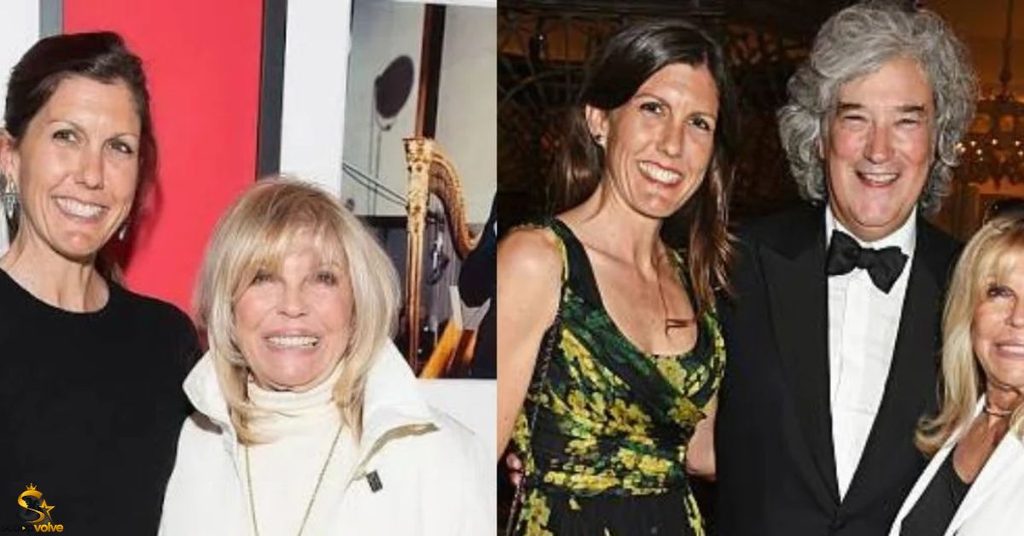
Amanda Kate Lambert is known for her connection to one of America’s most recognizable entertainment families as the daughter of singer Nancy Sinatra and granddaughter of legendary performer Frank Sinatra. Her public story intersects with photography, family history, and the preservation of cultural memories. A particularly important project is the illustrated book Sinatra, compiled by Amanda Erlinger and Robin Morgan, which brings together rare images from family collections and other photographic archives. The project demonstrates how photographs can add personal context to a celebrated life. Understanding this family connection also raises a broader question: who gets to tell a legend’s story? The answer involves family memories, historical research, editorial decisions, and responsible preservation of evidence.
Quick Facts: Amanda Kate Lambert
| Category | Details |
| Name used in biographical searches | Amanda Kate Lambert |
| Professional publishing name | Amanda Erlinger |
| Mother | Nancy Sinatra |
| Father | Hugh Lambert |
| Maternal grandfather | Frank Sinatra |
| Sister | Angela Jennifer “AJ” Lambert |
| Reported birth date | March 17, 1976 |
| Reported age in 2026 | 50 |
| Family connection | Sinatra family |
| Known public project | Sinatra illustrated book |
| Book compilation credit | Amanda Erlinger and Robin Morgan |
| Main area of public interest | Photography, family history, and legacy preservation |
Why Amanda Kate Lambert Is a Strong Article Subject
A celebrity-family profile becomes more useful when it explains why a person matters beyond a famous relative. Here, the central subject is the connection between family memory and public cultural history.
Frank Sinatra was a major singer and actor whose career shaped American popular entertainment. His recordings, films, stage performances, and distinctive musical phrasing continue to attract audiences. His legacy is preserved through commercial recordings, film archives, photographs, published biographies, and the memories of people who knew him.
Nancy Sinatra developed her own successful career as a singer and actress. Her recording of “These Boots Are Made for Walkin’” became an international hit in the 1960s, while her version of “Bang Bang” reached a new generation of listeners through its use in Quentin Tarantino’s Kill Bill: Volume 1. Her career gives her a distinct place in entertainment history, separate from her relationship with her father.
Within this broader history, Amanda Kate Lambert is a relevant search subject because her family connection intersects with a documented photographic publication.
Three factors explain the subject’s relevance:
- Cultural significance: Frank Sinatra’s career gives the family’s historical material lasting interest.
- Personal perspective: Family photographs can reveal aspects of a person’s life that differ from a public performance or carefully produced publicity image.
- Historical interpretation: Selecting, captioning, and publishing images influences what future audiences see and remember.
A responsible biography should distinguish these documented connections from assumptions about a person’s entire career, private activities, or responsibilities.
A Family Story Is Not the Same as a Fan Story
A family story and a fan story may describe the same person, but they begin with different relationships to the past.
Fans often discover Frank Sinatra through recordings, films, concert footage, interviews, and biographies. Their understanding develops through material that has entered public circulation. Family members may also have access to photographs, correspondence, albums, and personal memories that were never originally intended for a general audience.
This difference matters because private memories can become part of public history when they are documented and shared.
A photograph of Sinatra performing onstage might help explain his public image, while an image from an ordinary family gathering could offer a different perspective. Neither automatically tells the complete story. Each provides a particular piece of evidence, provided its identity, date, and context can be established.
Family recollections can be valuable, but memory is not identical to an independently verified historical record. People can remember events differently, and details may become less certain over time. Independent researchers can contribute by comparing accounts with contemporary documents and other reliable sources.
The strongest historical account combines these perspectives. It respects personal memories while distinguishing recollection from documented fact. That approach gives readers a more balanced understanding of the person behind the public image.
The Value of Family Archives
Family archives preserve materials that might otherwise be lost. They can include photographs, letters, handwritten notes, recordings, documents, and albums assembled over several generations.
For a family connected to a major cultural figure, these materials can have significance beyond sentimental value. They may help researchers understand relationships, professional milestones, personal surroundings, and everyday experiences that conventional biographies do not fully document.
A photograph can establish details about clothing, locations, people, and events. When the date, photographer, and circumstances are known, it may also help researchers build a more reliable timeline.
However, an image without context can create confusion. A date may be incorrectly remembered, a person may be misidentified, or a photograph may be presented with a caption that goes beyond what the evidence supports.
Effective archival work therefore involves several practical steps:
- Preservation: Protect original photographs and documents from excessive light, moisture, and physical damage.
- Identification: Record names, dates, locations, and other details that can be established.
- Digitization: Create high-quality digital copies while protecting fragile originals.
- Verification: Compare recollections with contemporary records and reliable published sources.
- Organization: Maintain records that explain where materials came from and how they have been handled.
- Responsible publication: Consider privacy, copyright, permissions, and historical context before making materials public.
Digitization makes photographs easier to examine and reproduce, but it does not automatically prove their authenticity. Supporting documentation remains essential.
In this context, the public interest in Amanda Kate Lambert connects to a wider lesson: family collections can contribute to cultural history when their contents are preserved, identified, and presented carefully.
Why Archive Work Also Creates Power
An archive does not simply preserve history. Decisions about what to retain, describe, publish, or withhold can influence how the public understands a person.
This is not necessarily a problem. Every book has a limited number of pages, and every exhibition requires editorial choices. The important point is that those choices shape the story audiences encounter.
Imagine a collection containing photographs from several stages of a celebrity’s life. A publisher might choose images showing professional success, family relationships, and quieter personal moments. Together, they create a particular impression. A collection containing only glamorous photographs may emphasize celebrity, while a broader selection of documented experiences may offer a more nuanced view.
Archive custodians, editors, and publishers therefore have interpretive responsibilities.
For a famous family, preserving history may also mean protecting privacy. Not every photograph belongs in a book, and not every personal interaction needs a public explanation.
A responsible archive process should ask:
- Is the material authentic, and can its origin be established?
- Does the caption accurately reflect what is known?
- Is publication relevant to the person’s documented history?
- Have the necessary permissions been obtained?
- Could publication unnecessarily expose another private individual?
These questions matter particularly when archives contain images of people who did not choose public attention.
The broader lesson is that preservation and editorial responsibility should work together. Family archives can deepen public memory, but their historical value depends partly on how accurately and thoughtfully their contents are presented.
The goal should not be to control every interpretation of a celebrity’s life. It should be to preserve trustworthy evidence while allowing readers to distinguish documented history from personal interpretation.
The Publisher’s Role in a Legend’s Story
Publishers transform archival material into an organized experience for readers. They influence the selection and sequence of images, captions, accompanying essays, physical presentation, and distribution.
The book Sinatra provides a concrete example. Its official publisher information identifies Amanda Erlinger and Robin Morgan as its compilers. ACC Art Books published the 400-page hardcover in October 2015, and Simon & Schuster distributes the listed edition. The volume includes rare family photographs, images from other collections, and contributions from prominent entertainers and photographers.
The book was produced in connection with the centenary of Frank Sinatra’s birth. Its format emphasizes photography, giving readers an opportunity to encounter historical material through images as well as written commentary.
A luxury or limited-edition book may feature high-quality printing, substantial binding, and a protective presentation case. These features can make a publication attractive to collectors, but physical quality alone does not establish historical accuracy.
Good publishing combines presentation with editorial care. That includes accurate captions, appropriate permissions, clear attribution, and sufficient background for readers to understand unfamiliar people and events.
The publisher’s responsibility is particularly important when a volume contains hundreds of photographs. Readers may assume that every detail in a professionally produced book has been independently verified. Editors should therefore distinguish confirmed information from recollections and incomplete records.
A well-produced book can serve several audiences. Longtime fans may recognize familiar moments, younger readers may discover Sinatra’s cultural significance, and researchers may find images that add context to existing accounts.
Publishing also moves family material beyond its original setting. Once photographs are reproduced and distributed, they become part of a wider cultural conversation. That makes transparency, accurate attribution, and respectful presentation essential.
The Historian’s Role: Distance Can Be Useful
Historians study celebrity lives by examining evidence, comparing accounts, and placing events within their historical setting. Their work can complement family-led storytelling because it offers methods for testing claims rather than simply preserving memories.
Historical distance can be useful. A researcher outside the family may be well positioned to compare conflicting accounts, identify contradictions, and examine how public narratives have changed. However, distance alone does not guarantee accuracy. Historians can also make mistakes or rely on incomplete sources.
A careful researcher examining Sinatra history might compare a family photograph with dated newspaper reports, contemporary interviews, concert records, and documented career events. If a caption identifies an image as belonging to a particular performance, independent evidence may help confirm its date and location.
The historian’s role is not necessarily to challenge the family. It is to explain what different types of evidence can establish.
A useful approach separates information into three categories:
- Documented facts: Details supported by reliable records or multiple independent sources.
- Personal recollections: Memories attributed to the person who shared them.
- Unresolved questions: Details for which sufficient evidence is not available.
This distinction protects the value of family contributions while maintaining the integrity of the historical record. It also helps readers understand that uncertainty is not the same as dishonesty.
When writing about a private family member, journalists should apply the same standards they use for other subjects. A famous family connection may explain public interest, but it does not remove the need for evidence.
A balanced profile recognizes the value of family knowledge while acknowledging the independent contribution of historical research.
Nancy Sinatra Adds Another Layer

Nancy Sinatra is central to understanding the family’s public legacy because she developed her own career while maintaining a direct connection to Frank Sinatra’s artistic and personal history.
Born on June 8, 1940, Nancy became an internationally recognized singer. Her recording of “These Boots Are Made for Walkin’” reached No. 1 on the US Billboard Hot 100 in 1966 and became a defining song of her career. Her version of “Bang Bang,” written by Sonny Bono and first recorded by Cher, later gained renewed attention through its inclusion in Kill Bill: Volume 1. <Cite refs={[“turn281430news27″,”turn281430search26”]}/>
Nancy’s significance extends beyond these recordings. As Frank Sinatra’s daughter, she has a personal connection to his life that audiences cannot obtain through music alone. Her own achievements also give her an independent place in entertainment history.
For Amanda Kate Lambert, the family connection spans two generations of public musical history. Nevertheless, a responsible profile should not reduce her identity to her relationships or assume that every private family detail is available for publication.
Nancy’s recollections can contribute to the historical record, but a particular memory should be identified as her perspective rather than treated as the only possible account. This allows personal experience to enrich the story without replacing other evidence.
Photography and Legacy Preservation
Photography can preserve details that written biographies overlook. Family images may record homes, clothing, gatherings, travel, friendships, and the everyday environments surrounding a public career.
When properly identified, these images can help readers see a historical figure in more than one role. A performer may also have been a parent, sibling, friend, or member of a wider community. The images can add context to that fuller life without requiring exaggerated claims about what they mean.
However, the presence of a photograph does not automatically establish its significance. Its value depends on provenance, accurate identification, and the questions it can help answer.
The Sinatra publication demonstrates how selected images from family and professional collections can be brought together in a single volume. The publisher describes the book as including rare and previously unseen family photographs, along with images from other archives.
Such a project can make historical material accessible to readers who would otherwise have little opportunity to see it. It also shows why image selection and caption writing matter: photographs communicate information, but their interpretation depends on context.
For Amanda Kate Lambert, the broader significance of the photographic legacy is the relationship between inherited family memory and the public preservation of cultural history. That connection is meaningful without assuming responsibility for every part of the family’s archive.
The Fan’s Role: Keeping the Story Alive
Fans help keep a celebrity’s work relevant by listening to recordings, watching films, collecting publications, sharing memories, and introducing historic performances to new audiences.
Frank Sinatra’s legacy continues through more than his original recordings. His music appears in films, television programs, public performances, and discussions about popular music. These renewed encounters allow audiences who never experienced his original era to discover his work.
Fans also preserve concert programs, records, magazine covers, photographs, and other memorabilia. When properly documented, these objects can help researchers understand how a performer was received during a particular period.
However, enthusiasm cannot replace verification. An image shared repeatedly online may acquire an incorrect date or misleading caption. A story may become familiar in fan communities without strong supporting evidence.
Responsible fan participation involves checking information before repeating it, distinguishing speculation from fact, and respecting the privacy of living relatives. Cultural importance does not make every aspect of a family’s private life a public entitlement.
Families may contribute personal context, publishers make selected material accessible, historians test claims, and fans sustain interest in the work. These roles can complement one another without requiring everyone to tell the same story in the same way.
The Main Debate: Control or Openness?
The central question surrounding a famous family’s archive is whether its history should remain under family control or be opened to wider public examination. The answer does not need to be an absolute choice between control and openness.
Family members have legitimate interests in privacy, consent, and the protection of personal material. Researchers and readers also benefit from access to reliable evidence about people whose work has influenced public culture.
Different materials deserve different treatment. A photograph documenting a public performance may have a clear historical purpose. A private image involving children, personal correspondence, or an intimate family occasion may require greater caution.
| Principle | Why It Matters |
| Privacy | Protects personal experiences with little relevance to public history. |
| Access | Allows legitimate researchers to study documented material. |
| Accuracy | Reduces incorrect dates, captions, and assumptions. |
| Accountability | Helps distinguish evidence from interpretation. |
| Context | Explains why an image or document matters. |
These principles are compatible. A family can protect sensitive materials while making selected historical records available through books, exhibitions, or authorized collections.
Why Respect Matters in This Story
Respect is essential when writing about people who are connected to a famous family but maintain a comparatively private public profile.
A celebrity relationship may explain why readers are interested in someone, but it does not justify inventing details about their career, finances, relationships, or personal experiences. Repetition across biography websites does not automatically make a claim reliable.
A useful profile of Amanda Kate Lambert should distinguish documented public associations from information that remains uncertain. It can explain the relevance of family background and photography without implying that every aspect of her life is available for public examination.
A respectful tone does not mean avoiding meaningful questions. Writers can discuss how archives are selected, how publishing shapes historical narratives, and how families preserve cultural inheritance.
The difference lies in evidence and framing. A writer can explain that family photographs may reveal aspects of a celebrity’s life that were not widely visible to the public. It would be inappropriate, however, to invent an emotional explanation for a photograph simply because it makes the story more compelling.
Respect also extends to other family members. Nancy Sinatra, Hugh Lambert, and the next generation should be described through accurate relationships and documented public contributions.
A trustworthy profile follows three basic rules:
- Do not present speculation as established biography.
- Do not confuse a family relationship with proof of professional achievement.
- Do not treat privacy as evidence that someone has something to hide.
These principles improve the article’s accuracy and readers’ confidence in its conclusions.
What Writers Should Avoid
Writers covering famous families need to balance reader interest with factual accuracy. This is particularly important when a subject has a recognizable family name but a limited independently documented biography.
Several common mistakes can weaken this type of article.
- Treating reported details as confirmed facts: A reported birth date, such as March 17, 1976, should be attributed appropriately unless an authoritative record confirms it.
- Confusing names and publishing credits: The official book listing identifies Amanda Erlinger and Robin Morgan as compilers. Use the credited name when discussing that publication. <Cite refs={[“turn281430search0″,”turn281430search24”]}/>
- Inventing professional responsibilities: A book credit does not automatically establish ownership or management of an entire family archive.
- Adding unsupported family stories: Avoid imagined disputes, emotional reactions, and private events that reliable sources do not establish.
- Using publishing details without checking: Page counts, edition limits, protective cases, and publisher or distributor roles should be checked against the specific edition.
- Repeating keywords unnaturally: Search optimization should improve discoverability without making the article repetitive.
- Confusing cultural importance with public entitlement: A famous person’s historical significance does not mean every private family document must be published.
Avoiding these mistakes creates a useful historical profile rather than a speculative celebrity biography. It also makes the content more durable because carefully qualified information is less likely to mislead readers.
Practical Article Direction for SEO in 2026
A strong SEO strategy should answer readers’ likely questions while keeping the historical discussion central. People searching for the subject may want to understand the family background, the connection to Nancy Sinatra and Frank Sinatra, and the photographic publication associated with Amanda Erlinger.
The article should answer those questions directly without suggesting that information is publicly confirmed when it is not.
A practical approach includes:
- Establish identity and relevance early: Explain the documented family connections and the subject’s relevance to the article.
- Use related entities meaningfully: Mention Nancy Sinatra, Frank Sinatra, Hugh Lambert, AJ Lambert, Robin Morgan, and Amanda Erlinger only when their relevance is clear.
- Clarify the book connection: Identify Sinatra as a publication compiled by Amanda Erlinger and Robin Morgan.
- Address wider search intent: Explain family archives, photography, public memory, publishing, and historical evidence.
- Maintain factual transparency: Attribute reported information and omit unsupported personal details.
- Use readable formatting: Keep paragraphs focused and include a concise facts table.
- Prioritize reader trust: Avoid sensational claims and unnecessary repetition.
Semantic SEO works best when related people, publications, and concepts contribute to the reader’s understanding. In this case, the connection between family memory, photography, historical research, and publishing is more useful than repeating the same biographical claim in multiple paragraphs.
References to additional exhibitions, collections, or centenary projects should be included only when the precise project and its relevance can be established. Similarly, a retailer listing should not be treated as proof of a person’s wider professional responsibilities.
A Bigger Lesson About Famous Families
The Sinatra family story illustrates a broader issue affecting many famous families: public recognition can turn private memories into cultural resources.
When a musician, actor, or other public figure becomes historically significant, photographs and personal documents may gain value beyond their original purpose. Family albums can become the basis for exhibitions, publishers may develop illustrated books, and researchers may revisit familiar events using newly available evidence.
Yet the next generation inherits more than photographs. It also inherits questions about interpretation, privacy, ownership, and responsibility.
Family members can help preserve culture by identifying people in old images, recording recollections, protecting fragile documents, and providing context for researchers. Publishers can make selected material accessible, historians can test claims, and fans can keep the work relevant through responsible collecting and sharing.
No single group needs to control every part of the conversation. A healthy historical record can accommodate family perspectives, independent scholarship, and public interest while recognizing the limits of each.
That is why the question of who gets to tell a legend’s story matters beyond one entertainment family. It concerns how societies remember influential people and how private experiences become part of shared cultural history.
Final Thoughts
The story of Amanda Kate Lambert offers a starting point for discussing the preservation of a famous family’s history. The wider subject involves photography, archival responsibility, publishing decisions, historical interpretation, and the boundaries between public interest and private life.
Frank Sinatra’s enduring cultural influence and Nancy Sinatra’s independent recording career give the family’s history a meaningful place in popular culture. Photographic collections and related publications can add valuable context when images are accurately identified and presented with care.
The strongest account combines family memory with documented evidence. It recognizes that relatives may provide personal insight, historians contribute independent analysis, publishers shape presentation, and fans help keep cultural work alive.
Ultimately, preserving a legend’s story is not simply about deciding who has the right to tell it. It is about treating evidence honestly, respecting private individuals, and helping future generations distinguish a compelling family memory from an established historical fact.